
23 October 2026
Benign prostatic hyperplasia (enlarged prostate): embolization, the alternative to surgery that keeps the prostate
When benign prostatic hyperplasia, the enlarged prostate, makes urinating difficult and medication is not enough, surgery is often proposed. But there is an alternative that works from inside the vessels, without cutting: the prostate stays, and so does sexual function. Here is what the studies show.
When the prostate grows
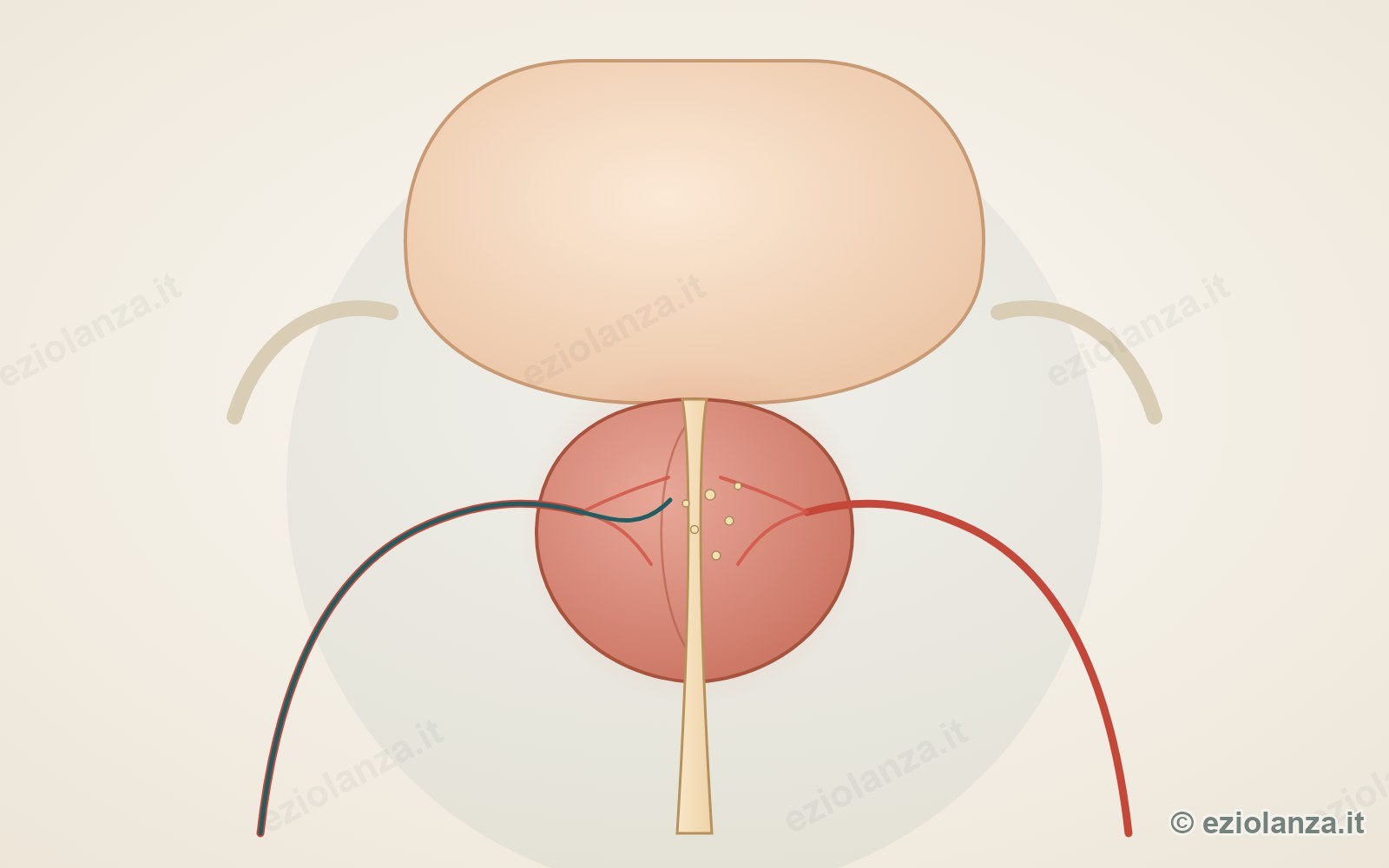
The prostate is a chestnut-sized gland that wraps around the first part of the urethra, the channel urine flows through. With age it tends to enlarge: this is benign prostatic hyperplasia, the so-called enlarged prostate, which affects about half of men over 50 and the great majority over 70. It is not a tumour and does not become one, but the growing prostate squeezes the urethra. The stream weakens, starting is an effort, the bladder never seems to empty completely, you get up two or three times a night. Sleep suffers, and so does the day.
Today's treatments and their side effects
Medication comes first: alpha-blockers relax the prostate, 5-alpha-reductase inhibitors slowly shrink it. They help many men, but not all, and they bring dizziness, low blood pressure, reduced desire and altered ejaculation. When they are not enough, the next step is endoscopic surgery, transurethral resection (TURP) or laser techniques, which remove from the inside the part of the prostate that obstructs. It works well and remains the reference treatment. It requires, however, spinal or general anaesthesia, a bladder catheter, a few nights in hospital and a period of bleeding. And even when the operation is performed perfectly, some consequences do not depend on the surgeon's skill but on the procedure itself: retrograde ejaculation, towards the bladder, affects the majority of men who have surgery; narrowing of the urethra, urine leakage and, in a minority, erection problems can appear. For many men in their 60s or 70s, still active, these effects weigh too much.
But there is an alternative: embolization
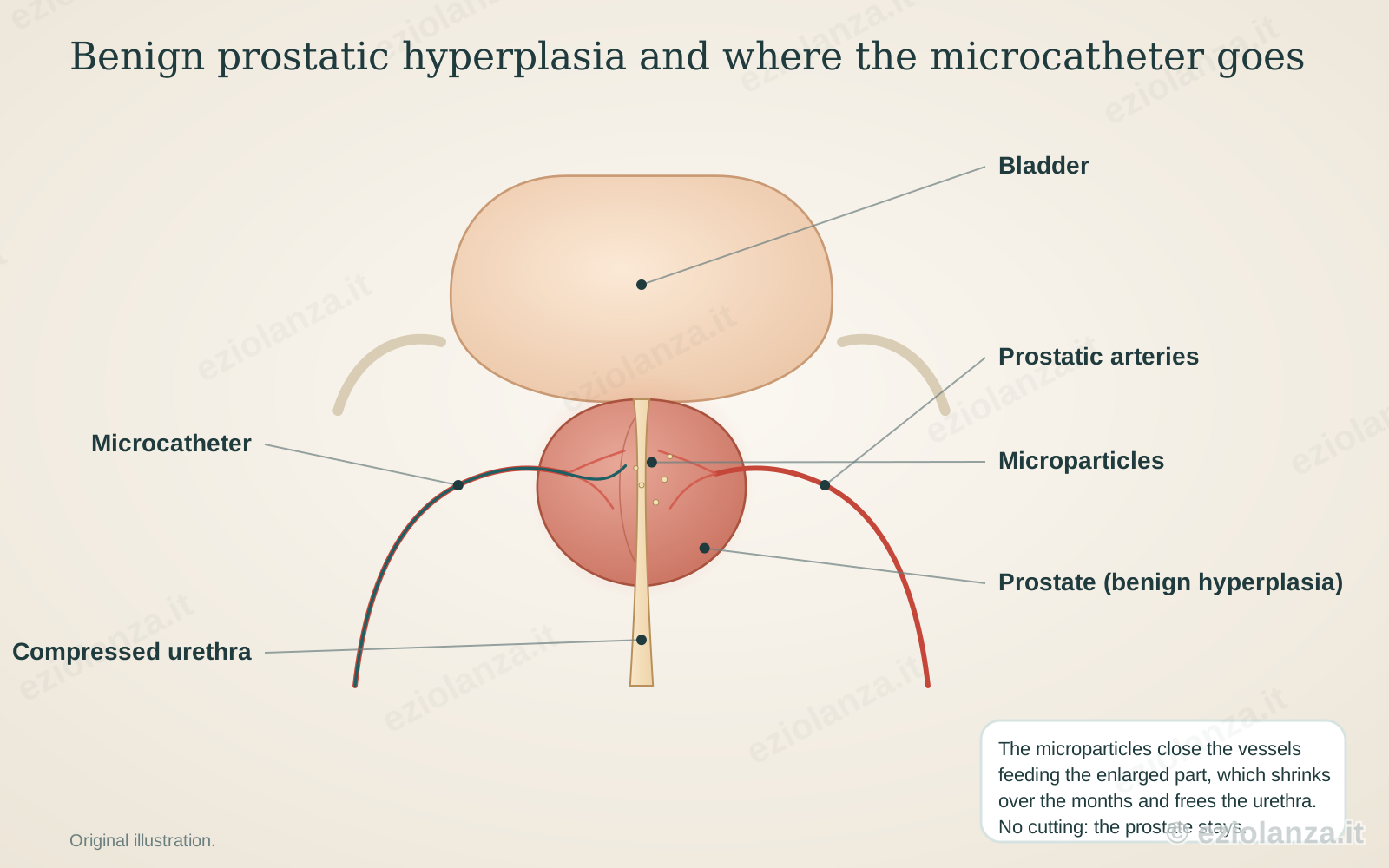
Prostatic artery embolization works from inside the vessels, without touching the urethra or the prostate from the outside. Through a puncture of a few millimetres at the groin or the wrist, a very thin catheter is guided to the two arteries that feed the prostate. A CT scan performed in the room, directly on the table, identifies these vessels precisely, as they are small and vary from person to person. A microcatheter reaches them and releases microparticles that stop the flow to the enlarged part of the gland. Deprived of blood, this part shrinks over the following months, by 20-30% in volume, and frees the urethra. All under local anaesthesia, in one or two hours, and you usually go home the same day or the next. The prostate stays where it is: nothing is removed and no scars are left.
What the studies show
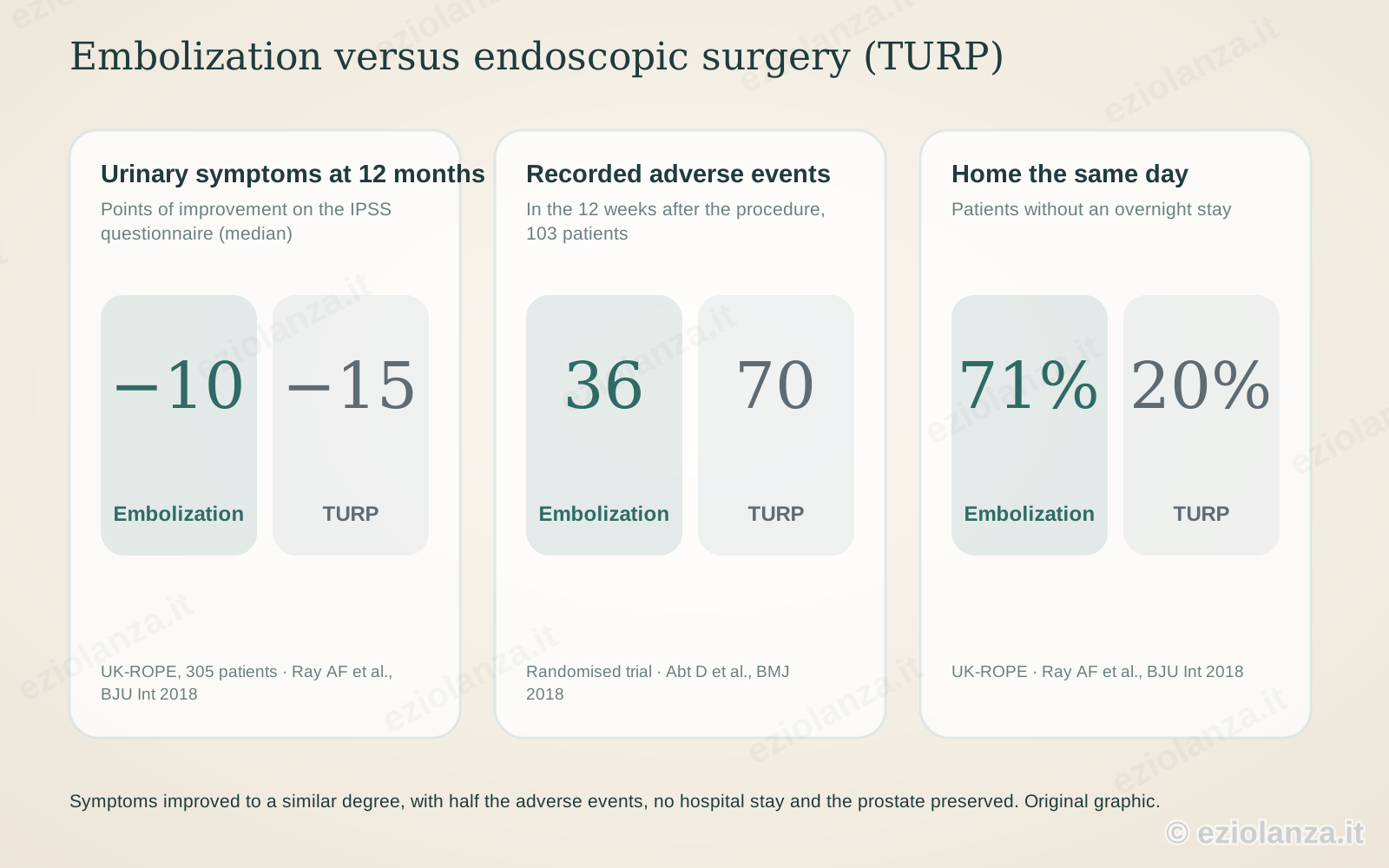
The evidence is solid. In a randomised trial published in European Urology, 80 men with severe symptoms were assigned to embolization or to a sham procedure without knowing which they had received: at six months symptoms had improved by 13 points more with embolization, a difference far greater than the placebo effect. The British UK-ROPE registry, born from the collaboration between interventional radiologists, urologists and the national agency NICE, followed 305 men: at one year symptoms had improved by 10 points with embolization and by 15 with TURP, with rare complications and 71% of procedures done without an overnight stay, against 20% for surgery. In the Swiss randomised trial published in the BMJ, after 12 weeks the improvement in symptoms was close to that of TURP, with 36 adverse events against 70, while urinary flow and volume reduction were greater after surgery. The 2022 Cochrane review concludes that, for symptoms and quality of life as perceived by the patient, the two options are similar.
The prostate stays, and so does your sex life
This is why many men choose it. The urethra and the sphincter are neither crossed nor cut, so the risks of narrowing and urine leakage linked to the endoscopic route do not arise. And ejaculation is preserved: a 2026 systematic review of 77 studies and over 11,000 patients, comparing minimally invasive prostate techniques, found that embolization does not significantly change erectile or ejaculatory function. In the UK-ROPE registry reported pain was low and the return to normal activities quick. And if surgery were ever needed in the future, embolization does not prevent it: surgery remains possible, often on a smaller prostate that bleeds less.
How long the result lasts
The Lisbon centre that introduced the technique has published data on 1,072 men followed for up to ten years: at the last check-up symptoms were still improved by an average of 10 points. Over time, in some cases, the prostate grows again: at five years about one man in five needed a further treatment, at ten years more than half, with a second embolization or with surgery. The result is therefore lasting, but not forever, and we say so straight away at the visit. For many men it means gaining years without surgery and without its effects, while keeping every option open.
Who it is for
Embolization is indicated when urinary symptoms from benign prostatic hyperplasia are moderate or severe and medication is not enough or not tolerated. It suits medium and large prostates well, where endoscopic techniques are more demanding, and men who want to avoid surgery or cannot face it because of age, anticoagulant therapy or other conditions. It is also an option for men with an indwelling bladder catheter for urinary retention and for recurrent bleeding from the prostate. Before proposing it, a urological assessment, PSA and, when indicated, the tests that rule out a tumour are needed; a contrast CT of the pelvic vessels checks that the arteries can be navigated. It is not suitable for men with severe atherosclerosis of the pelvic arteries or a very small prostate.
Risks and discomfort
In the first days a post-embolization syndrome is normal: burning on urination, urgency, a mild fever, sometimes traces of blood in the urine or semen, which settle with simple medication. Serious complications are rare: in the UK-ROPE registry, out of 216 embolizations, one case of serious infection, one transfusion, four groin haematomas and two small penile ulcers that healed on their own, caused by particles passing into a nearby vessel. Reducing this risk requires experience and CT in the room, as the registry authors themselves recommend. The procedure uses X-rays, with a contained dose.
In short
If benign prostatic hyperplasia is ruining your nights and medication is not enough, surgery is not the only way. Embolization improves symptoms to a similar degree, with half the complications, without a hospital stay and without touching the urethra. The prostate stays, and with it ejaculation and sexual function. At the visit, together with the urologist, we look at tests and symptoms and work out whether it is the right choice for you.
Treatments discussed in this article
Scientific sources
- Pisco JM, Bilhim T, Costa NV, et al. Randomised clinical trial of prostatic artery embolisation versus a sham procedure for benign prostatic hyperplasia. Eur Urol. 2020;77(3):354-362.
- Ray AF, Powell J, Speakman MJ, et al. Efficacy and safety of prostate artery embolization for benign prostatic hyperplasia: an observational study and propensity-matched comparison with transurethral resection of the prostate (the UK-ROPE study). BJU Int. 2018;122(2):270-282.
- Abt D, Hechelhammer L, Müllhaupt G, et al. Comparison of prostatic artery embolisation (PAE) versus transurethral resection of the prostate (TURP) for benign prostatic hyperplasia: randomised, open label, non-inferiority trial. BMJ. 2018;361:k2338.
- Jung JH, McCutcheon KA, Borofsky M, et al. Prostatic arterial embolisation for men with benign prostatic hyperplasia: a Cochrane review. BJU Int. 2023;131(1):32-45.
- Bilhim T, Costa NV, Torres D, Pinheiro LC, Spaepen E. Long-term outcome of prostatic artery embolization for patients with benign prostatic hyperplasia: single-centre retrospective study in 1072 patients over a 10-year period. Cardiovasc Intervent Radiol. 2022;45(9):1324-1336.
- Cahill EM, Lindenbaum MM, Estright A, et al. The impact of minimally invasive surgical therapy for benign prostatic hyperplasia on sexual function: a systematic review and meta-analysis. Prostate Cancer Prostatic Dis. 2026.
- Shin BNH, Maksoud R, Tan S, et al. Efficacy and tolerability outcomes of minimally invasive surgical treatments for benign prostatic hyperplasia: a random-effects network meta-analysis. World J Mens Health. 2026;44(1):49-63.
Want to know if it applies to you?
At the first consultation we review your clinical history and previous imaging together.
More articles
The information on this page is for general education and does not replace a medical consultation. The indication for any treatment must always be assessed individually.