
18 October 2026
Adenomyosis and uterine artery embolization: what 22 studies of 1,700 women show
Adenomyosis causes heavy, painful periods and, when medication is not enough, often leads to hysterectomy. A systematic review published in 2026 gathered 22 studies and 1,701 women treated with uterine artery embolization: here is what the data show, and what we still do not know.
What adenomyosis is
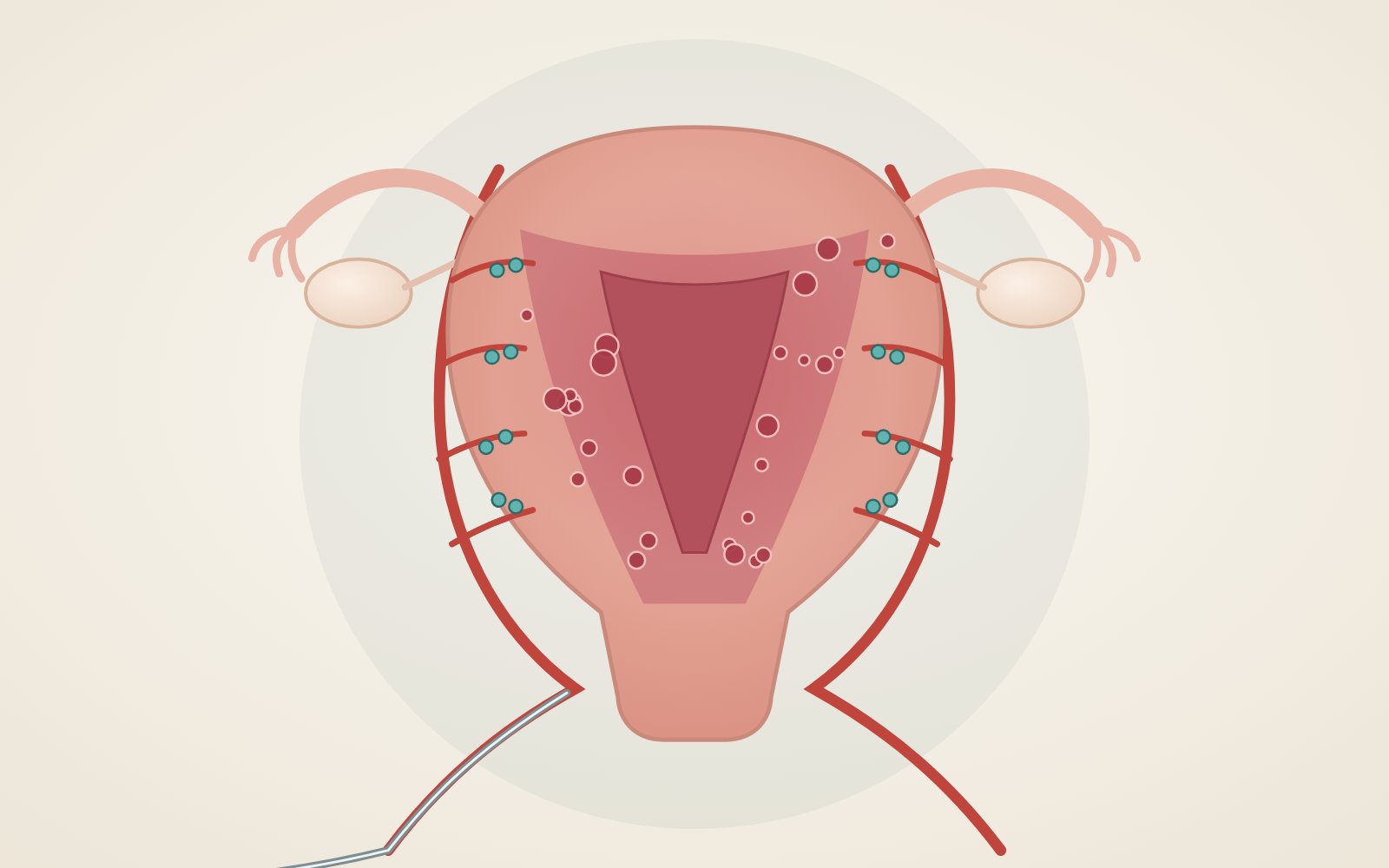
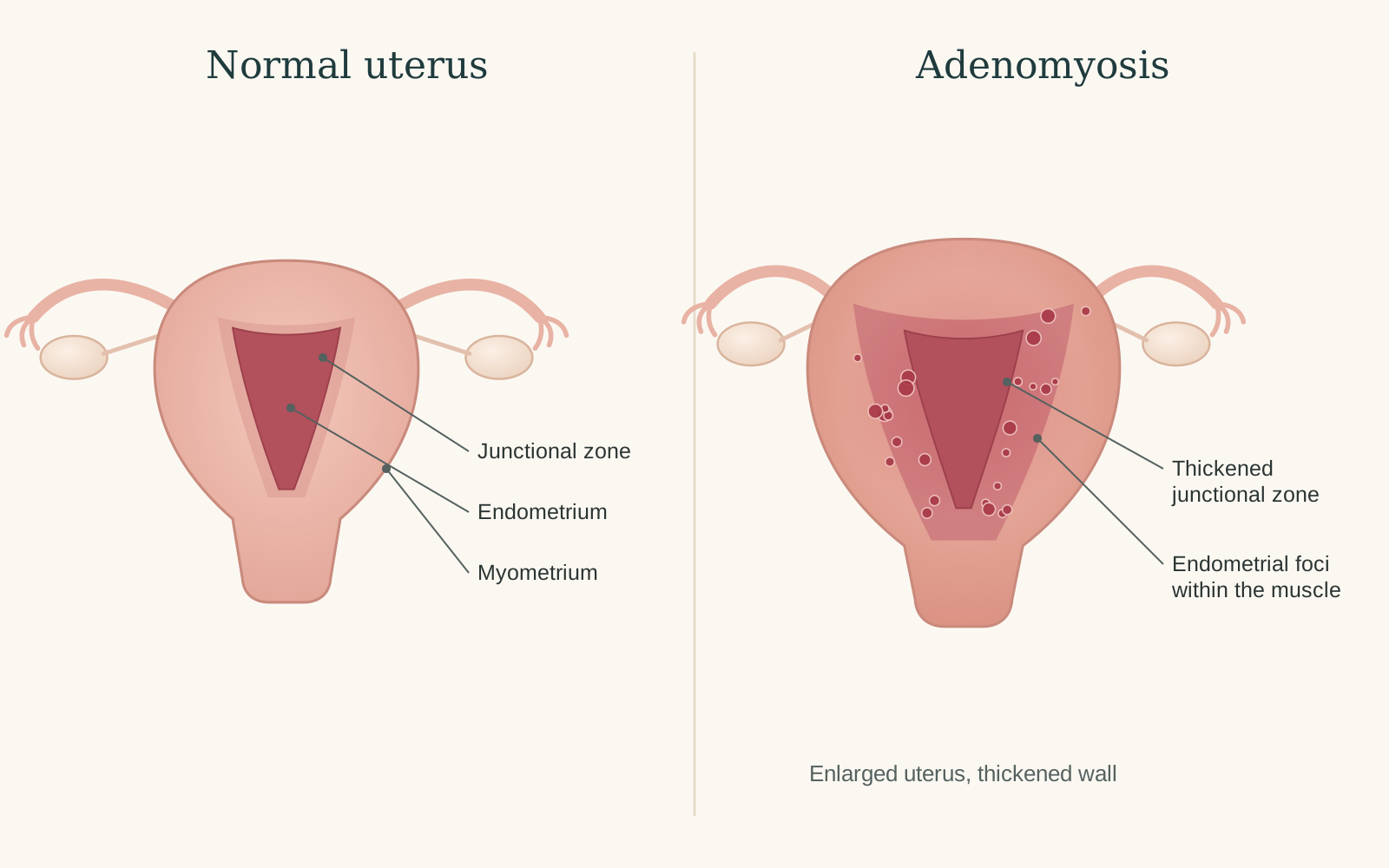
Adenomyosis is a benign condition in which the endometrium, the tissue lining the inside of the uterus, grows into the muscular wall. The surrounding muscle thickens and the uterus enlarges. Typical symptoms are very heavy periods, sometimes with anaemia, severe period pain, chronic pelvic pain and a feeling of heaviness or pressure on the bladder and bowel. It mainly affects women in the years before menopause, but today it is increasingly diagnosed in younger women too, and it often coexists with fibroids or endometriosis. Diagnosis relies on transvaginal ultrasound and above all on MRI, which shows thickening of the junctional zone, the layer of muscle next to the endometrium, and distinguishes adenomyosis from fibroids.
The available treatments
Treatment starts with medication: anti-inflammatories for pain, hormonal treatments such as the pill or the levonorgestrel-releasing intrauterine device, which reduces bleeding well, and in more difficult cases drugs that temporarily stop the menstrual cycle. When these are not enough or are not tolerated, the only definitive cure is hysterectomy, the removal of the uterus. Many women, however, prefer to keep their uterus or want to avoid surgery. Uterus-sparing alternatives include high-intensity focused ultrasound (HIFU), suited mainly to localised forms, and uterine artery embolization, the same technique that has been used for fibroids for thirty years.
How uterine artery embolization works
The procedure is performed under local anaesthesia or light sedation. Through a small puncture in the groin or wrist, a thin catheter is guided into both uterine arteries and calibrated microparticles are injected to close their smallest branches. The adenomyosis tissue, which needs a lot of blood, undergoes necrosis and is reabsorbed, while the rest of the uterus keeps receiving blood from collateral vessels. Compared with fibroids, in adenomyosis the vessels to reach are smaller and embolization has to be more complete: this is why pain can be more intense in the following days, and good pain management is part of the procedure.
The review: 22 studies and 1,701 women
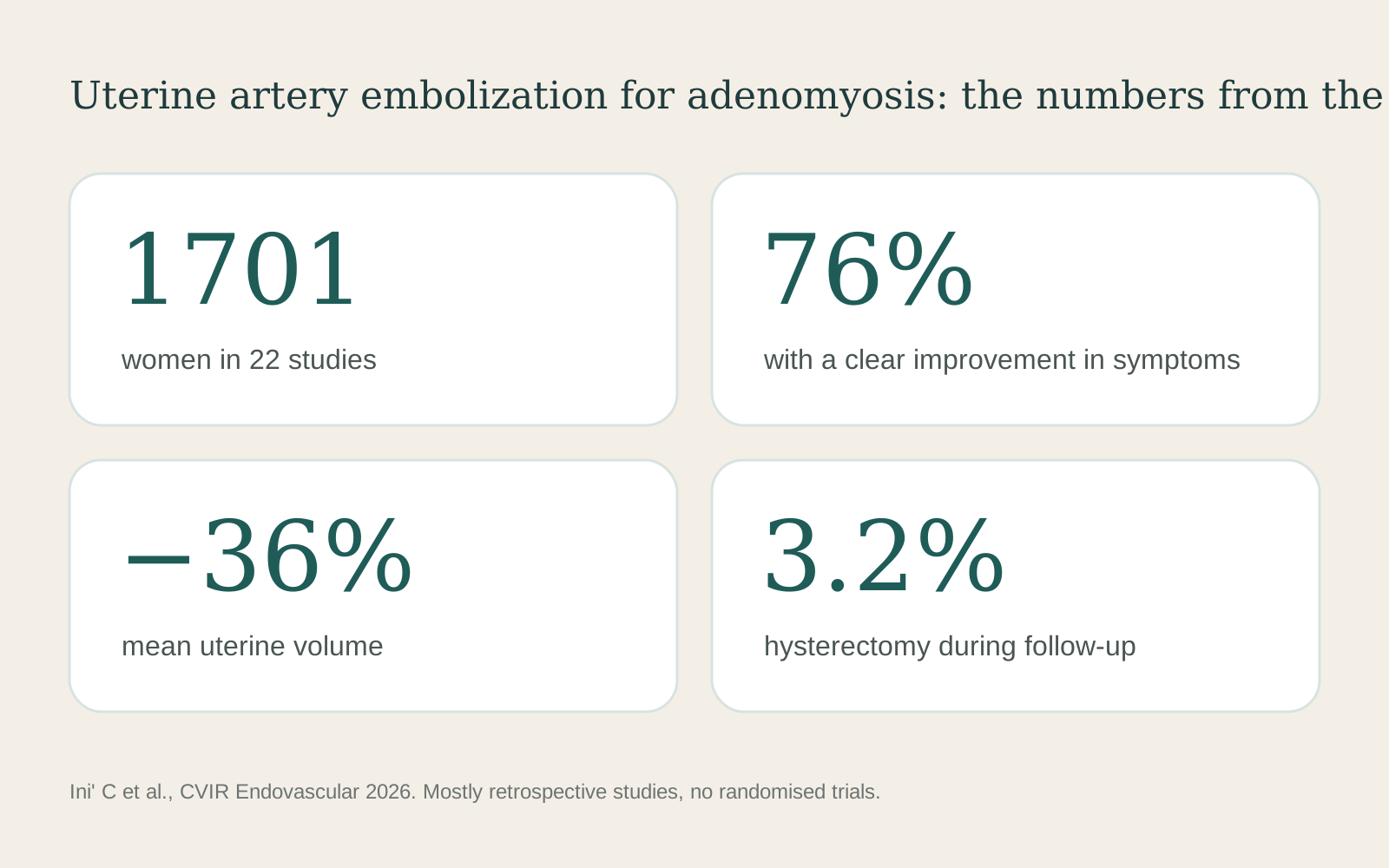
The systematic review, published in 2026 in CVIR Endovascular by a group from the University Hospital and University of Catania, selected all studies with at least ten patients published up to December 2025: 22 studies, for a total of 1,701 women with adenomyosis resistant to treatment, with a mean age of 43 and an average follow-up of about two and a half years, up to more than seven. The procedure was technically successful in 99.8% of cases. Overall, 1,301 of 1,701 women, 76%, had a clear improvement in symptoms, above all in heavy periods and then in period pain and the feeling of heaviness. The proportion varied widely between studies, from under half to 96%, but in more than half of the studies it exceeded 70%. During follow-up, 55 women, 3.2%, went on to have a hysterectomy.
What changes on imaging
In the studies that measured the uterus before and after treatment, the mean volume went from about 400 to 240 cubic centimetres, an average reduction of 36%, and the thickness of the junctional zone fell by about a third. The reduction in volume is usually seen on MRI between 3 and 12 months after the procedure and goes hand in hand with relief of the feeling of heaviness. Some studies suggest that results are better when MRI after embolization shows extensive necrosis of the adenomyosis tissue, and when the adenomyosis is highly vascular before treatment.
Safety
Complications were mostly mild: the most common problem was pelvic pain in the following days (7.4%), followed by nausea and light bleeding; infections such as endometritis were rare (0.5%). Only one serious complication was described, a necrosis of the uterus. In 25 women (1.4%) adhesions formed inside the uterine cavity, which can reduce fertility, and 45 women (2.6%), all over 40, went into early menopause, probably because some of the microparticles reached the ovaries through connections between the uterine and ovarian arteries. There were no deaths. It should be said that only 15 of the 22 studies reported complications in detail.
How long the benefit lasts
The improvement holds in most patients in the medium and long term, but not in all. In one of the included studies, heavy periods had returned in 40% of women at two years, although none of them chose hysterectomy. Those who do not respond well enough can repeat the embolization or consider surgery: having fibroids together with adenomyosis and a very thick junctional zone were associated with a higher chance of needing a second treatment.
The limits of the evidence
The authors are clear about the limitations. Two out of three studies were retrospective, and randomised trials are lacking: the only one comparing embolization with hysterectomy, the QUESTA study, was converted into an observational study. In many studies patients had both adenomyosis and fibroids, making it hard to tell which of the two responded to treatment. Symptoms were measured with different questionnaires, none specific to adenomyosis, and we do not yet know which material and particle size work best. Data on fertility and pregnancy after embolization for adenomyosis are also still scarce.
Who it may suit
Uterine artery embolization is an option to consider when adenomyosis causes significant symptoms that do not respond to medication, or when medication is not tolerated, and the woman wishes to keep her uterus or avoid surgery. An MRI is needed first, to confirm the diagnosis, assess its extent and check for fibroids. If a pregnancy is desired, the choice should be discussed with particular care together with the gynaecologist, because data are still limited. As the authors conclude, every woman with adenomyosis who is considering a hysterectomy should also be able to talk to an interventional radiologist, to build a tailored treatment plan.
Treatments discussed in this article
Scientific sources
Want to know if it applies to you?
At the first consultation we review your clinical history and previous imaging together.
More articles
The information on this page is for general education and does not replace a medical consultation. The indication for any treatment must always be assessed individually.