
Hip
Ultrasound-guided injection for trochanteric bursitis (lateral hip pain)
Pain on the side of the hip that gets worse when lying on that side comes from the bursa and the gluteal tendons over the greater trochanter. With ultrasound, a thin needle reaches exactly the inflamed spot.
How it is performed
The tendons of the gluteus medius and minimus attach to the greater trochanter, the bony prominence on the outside of the femur, protected by small gliding sacs called bursae. When the tendons are overloaded and the bursa becomes inflamed, pain appears on the side of the hip: so-called trochanteric bursitis, or greater trochanteric pain syndrome. Ultrasound first of all shows which structure is affected: a distended bursa, thickened tendons, partial tears or calcifications. With the patient lying on the healthy side, a thin needle is followed on screen in real time up to the bursa or the space around the tendon, where local anaesthetic and corticosteroid are deposited, without injecting it into the tendon. No radiation is used and the procedure is done as an outpatient. The immediate relief from the anaesthetic also confirms where the pain comes from.
Who it is for
- Pain on the side of the hip that gets worse when lying on that side, climbing stairs or getting up from a chair
- Trochanteric bursitis or gluteal tendinopathy confirmed on ultrasound
- Pain not improving with exercise, physiotherapy and anti-inflammatories
- Doubt about whether the pain comes from the hip joint, the spine or the trochanter (injection also for diagnosis)
Recovery
You can walk straight away. For a few days it is better to avoid strenuous effort and not sleep on the treated side. The corticosteroid works within 3-7 days; the benefit lasts longer if a gluteal exercise programme is followed in the following weeks.
Conditions treated in this area: hip osteoarthritis (coxarthrosis), groin pain and pain on weight-bearing, femoroacetabular impingement (alongside physiotherapy), pain on the side of the hip (trochanteric bursitis and greater trochanteric pain syndrome).
Bursa or tendons?
In an ultrasound study of 877 people with lateral hip pain only 20% had true bursitis, while about half had a problem in the gluteal tendons. This is why ultrasound before the injection matters: it shows where the needle should go and what to expect from treatment.
If the pain comes back
Corticosteroid is not repeated more than two or three times a year in the same place. If the pain comes back, the tendons are rechecked with ultrasound; for tendinopathy lasting many months, shockwave therapy or, in resistant cases, embolization of the small inflamed vessels around the trochanter can be considered.
Scientific evidence
In a randomised trial of 120 patients, corticosteroid injection led to recovery or clear improvement in 55% of patients at three months, compared with 34% with usual care, with no difference at one year. In the LEAP trial (BMJ, 204 patients) the injection was better than waiting in the short term, but an exercise and education programme gave better and more lasting results. The most recent reviews point to exercise as the core treatment and to the injection as a help during the painful phase.
References on PubMed
- Sonography of greater trochanteric pain syndrome and the rarity of primary bursitis
Long SS, Surrey DE, Nazarian LN — AJR Am J Roentgenol, 2013 · PMID 24147479
- Corticosteroid injections for greater trochanteric pain syndrome: a randomized controlled trial in primary care
Brinks A, van Rijn RM, Willemsen SP, et al. — Ann Fam Med, 2011 · PMID 21555750
- Education plus exercise versus corticosteroid injection use versus a wait and see approach on global outcome and pain from gluteal tendinopathy: prospective, single blinded, randomised clinical trial
Mellor R, Bennell K, Grimaldi A, et al. — BMJ, 2018 · PMID 29720374
- Effect of conservative treatment on greater trochanteric pain syndrome: a systematic review and network meta-analysis of randomized controlled trials
Wang SQ, Guo NY, et al. — J Orthop Surg Res, 2025 · PMID 39891188
Published data describe average results in groups of patients and are not a prediction of an individual outcome. The indication for treatment must always be assessed during a consultation.
Further reading on the blog
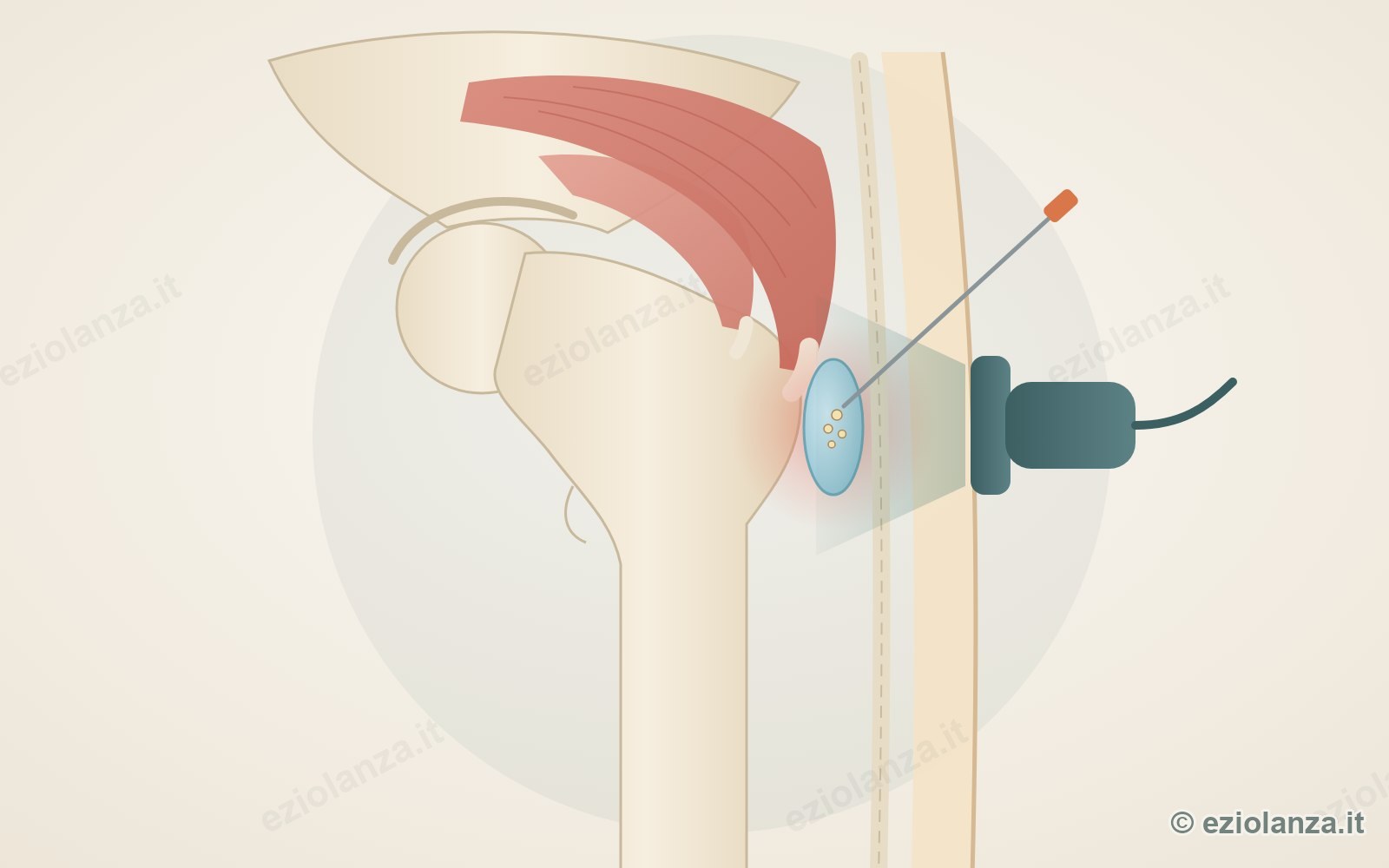
Greater trochanteric bursitis: how the ultrasound-guided injection works
Pain on the side of the hip that gets worse when lying on that side is often called trochanteric bursitis. Ultrasound shows that in many cases the gluteal tendons are involved, and lets the needle go exactly where it is needed. Here is how the ultrasound-guided injection works and what to expect.
Read the article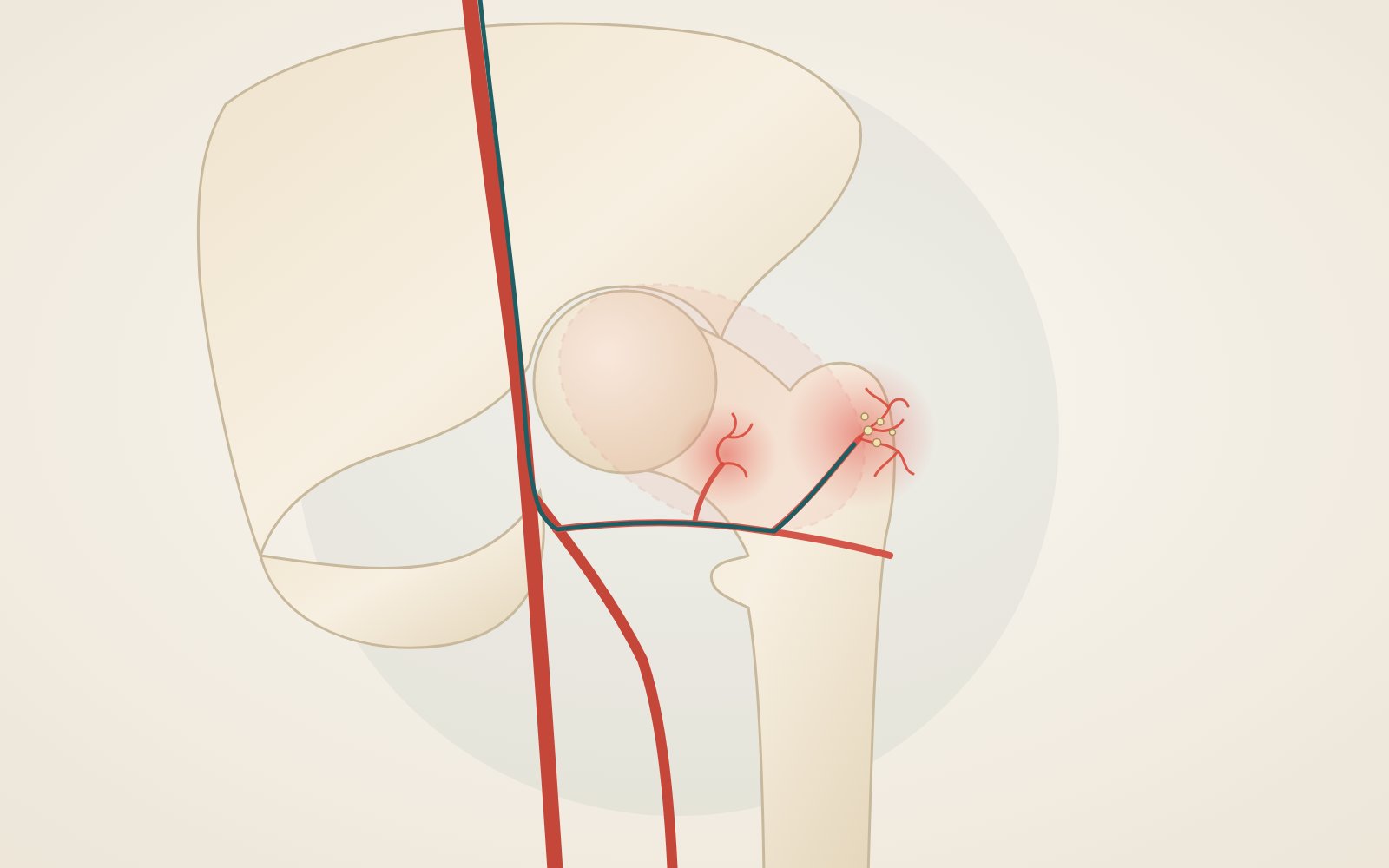
Hip pain from osteoarthritis or trochanteric pain syndrome: what embolization (TAME) can do
The HipE study, just published in Cardiovascular and Interventional Radiology, provides the first one-year data on embolization for hip pain, from both osteoarthritis and greater trochanteric pain syndrome. What it shows, and how it fits with the rest of the literature.
Read the article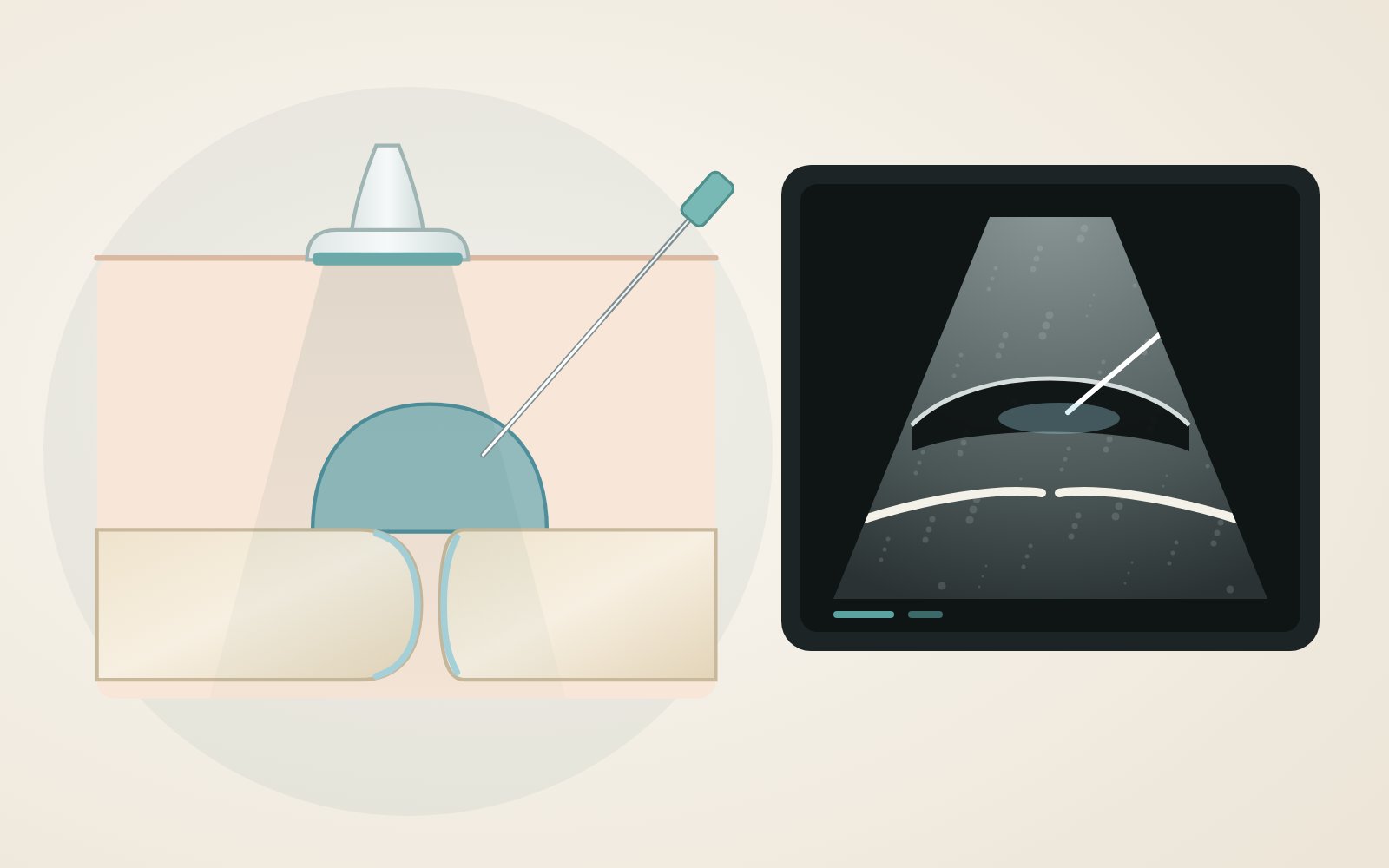
Had an injection that didn't help? Maybe the drug never reached its target
Many patients come to clinic saying they have already had an injection and it didn't help. Sometimes the problem is not the drug, but where it ended up. Here is what the studies say about the accuracy of blind and ultrasound-guided injections, and when the difference really matters.
Read the articleRisks, costs and opinions
The three questions patients ask most often before deciding, with clear answers.
What are the risks of ultrasound-guided injection for trochanteric bursitis (lateral hip pain)?
It is an outpatient procedure performed with a thin needle under local anaesthesia and continuous ultrasound guidance, which makes it possible to see the needle, the target and the structures to avoid in real time. The most common issues are transient: pain or swelling for 24-48 hours, a small bruise. Joint infection is a rare event, prevented by sterile technique. In treatments with cortisone, facial flushing or a temporary rise in blood sugar may occur in diabetic patients. Personal risks and contraindications are assessed during the consultation.
How much does the ultrasound-guided injection for trochanteric bursitis (lateral hip pain) cost?
The cost depends on the setting in which the procedure is performed: some treatments are available through the National Health Service or under agreement, others privately or through insurance. The quote is given clearly before scheduling the treatment, and includes the assessment, the procedure and the planned follow-up. During the consultation I tell you which pathway is available in your case: you do not have to decide before knowing the cost.
Does it really work? What patients and the literature say
The most frequent questions are "how long does the benefit last?" and "can I repeat it?". The answer depends on the diagnosis and the stage: some injections resolve the painful episode, others serve to open a window in which rehabilitation becomes effective. Experiences read in forums concern cases different from yours. During the consultation we review your imaging and I tell you what to expect, how many sessions may be needed and when another approach is better.
Want to know if it is right for you?
At the first consultation we review your clinical history and previous imaging together.