
Uterine fibroids: embolization as an alternative to surgery in Milan
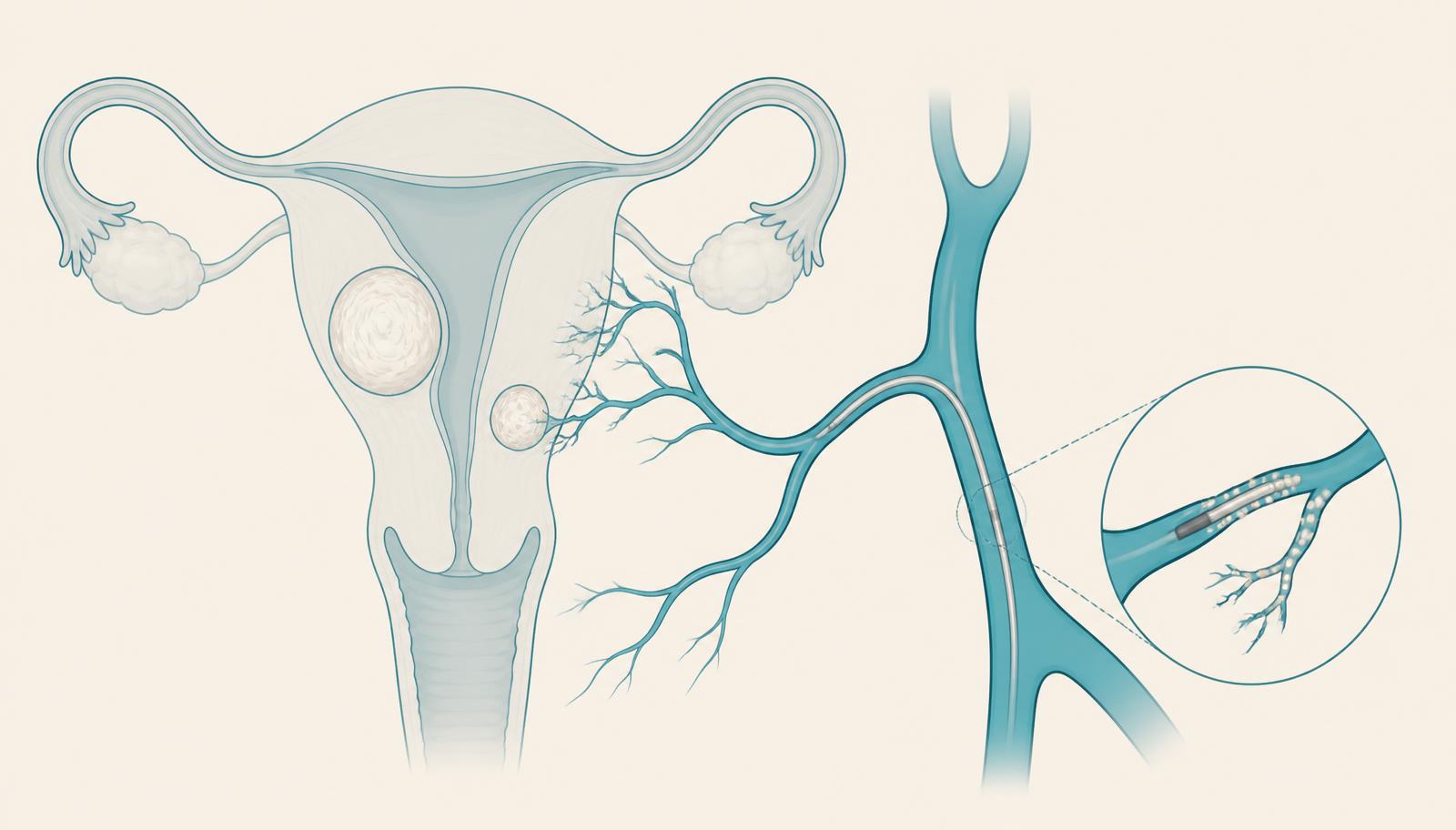
Uterine fibroids can cause very heavy periods, anaemia, a feeling of heaviness in the lower abdomen, and increased urinary frequency. Uterine artery embolization makes it possible to treat them while preserving the uterus, through a percutaneous access and without surgery.
Do you recognise these symptoms?
- Very heavy or prolonged periods
- Iron-deficiency anaemia with persistent tiredness
- Feeling of heaviness or swelling in the lower abdomen
- Needing to urinate often or difficulty emptying the bladder
- Pain during intercourse
How it works
Fibroids depend on the blood they receive from the uterine arteries. With a femoral access at the groin these arteries are reached with a microcatheter and microparticles are injected that reduce the blood supply to the fibroids: they progressively shrink and symptoms improve, while the healthy uterus maintains its own blood supply.
Who it is for
It is indicated in women with symptomatic fibroids who wish to avoid hysterectomy or myomectomy, or who are not optimal candidates for surgery. The indication is defined together with the gynaecologist, with an MRI of the pelvis documenting the number, location and size of the fibroids.
The practical pathway
The procedure is performed as a day-case or with a short stay, under local anaesthesia with sedation. In the first few days, cramps similar to menstrual ones are expected, controlled with the prescribed pain therapy. Improvement in menstrual flow is seen from the following cycles, while the reduction in volume is progressive over the months.
And pelvic pain?
Chronic pelvic pain from pelvic venous congestion is a condition distinct from fibroids, but also treatable endovascularly: if you have pelvic pain that worsens on standing and after intercourse, it should be assessed specifically.
Treatments we can perform
Frequently asked questions
Do I keep the uterus?
Yes: the goal of embolization is to control symptoms while preserving the organ.
Is the access from the wrist?
For this procedure we use the femoral access at the groin.
Which examinations are needed?
A recent pelvic MRI with contrast and blood tests, in addition to the gynaecological assessment.
Want to know if it is your case?
At the first consultation we review your clinical history and previous imaging together.
Other guides
The information on this page is for general guidance and does not replace a medical consultation. The indication for treatment must always be assessed individually.