
Varicocele embolization: questions and answers
Embolization is the reference minimally invasive treatment for varicocele: it is performed through a venous puncture, without surgical incision or general anaesthesia. Here are the answers to the questions patients ask most often, before and after the procedure.
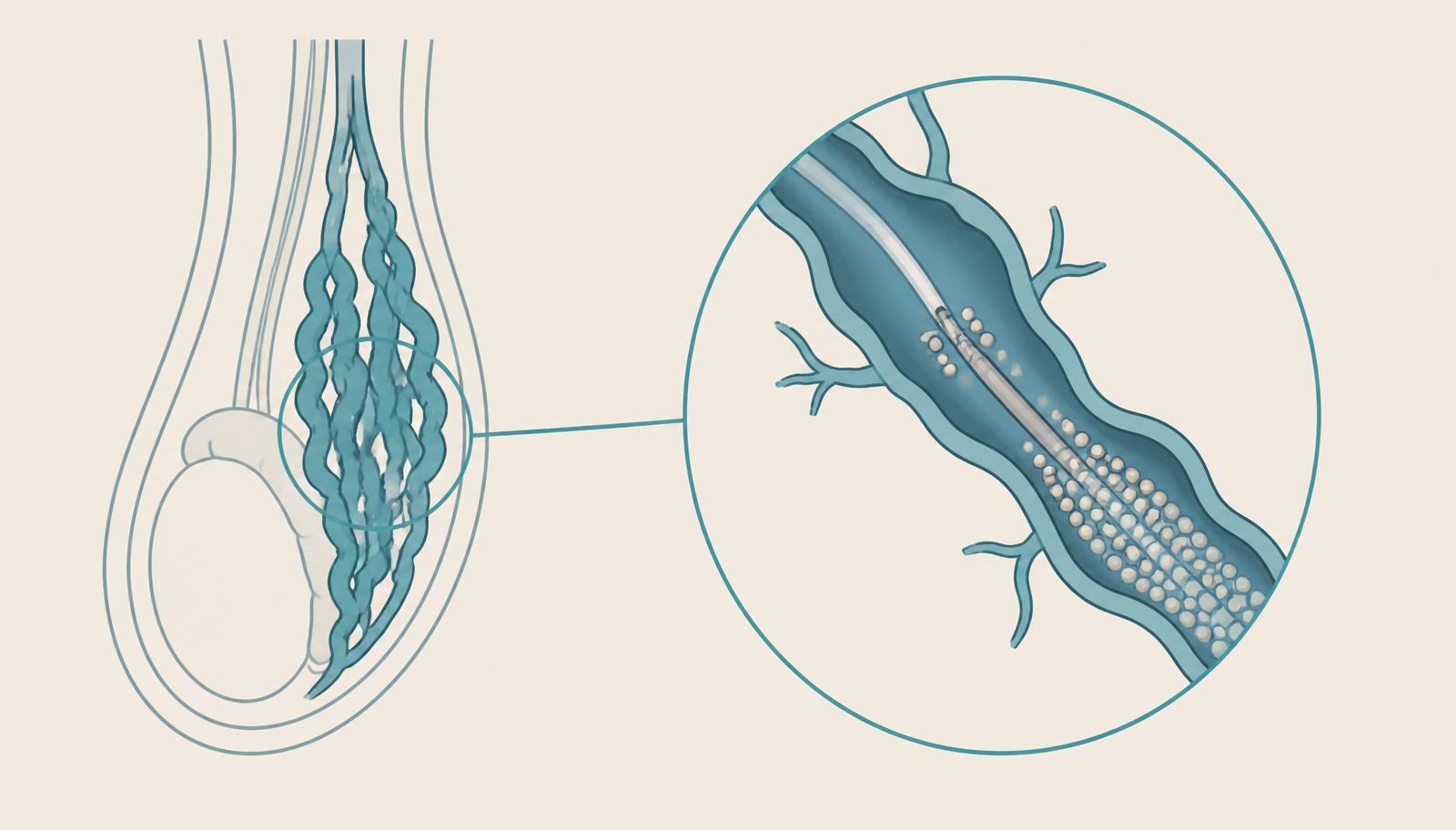
Do you recognise these symptoms?
- A dull ache or sense of heaviness in the testicle, more intense in the evening
- Palpable veins, often described as a "bag of worms"
- Worsening after standing for a long time or after sport
- Sperm analysis abnormalities found during a fertility work-up
What is varicocele embolization?
It is a minimally invasive endovascular procedure performed by the interventional radiologist: through a puncture of the femoral vein, a catheter is introduced and, under radiological guidance, advanced up to the dilated internal spermatic vein. There, embolic or sclerosing agents are injected to close the vessel, stopping the reflux of blood towards the testicle.
When is it indicated?
The main indication is a high-grade varicocele (grade III or IV), symptomatic or associated with sperm analysis abnormalities: up to 95% of patients with varicocele show alterations in spermatogenesis, which is why treatment is often assessed as part of a male fertility work-up, together with the andrologist.
How does the procedure work?
It is performed under local anaesthesia at the femoral access point, without surgical incision. It takes about 30-40 minutes. In selected cases we use cyanoacrylate, a medical glue that occludes the vessel immediately and durably, with results superior to metal coils and traditional sclerosing agents.
What happens afterwards?
It is a safe and painless procedure: after a few hours of observation you go home the same day, with an almost immediate return to daily activities. In the following days intense sport should be avoided, while sedentary work is usually resumed very soon.
Treatments we can perform
Frequently asked questions
Does varicocele embolization work?
Yes: the success rate of the procedure is around 98%, without significant complications in the large majority of cases.
How long does the procedure take, and is admission needed?
It takes about 30-40 minutes, as an outpatient procedure: no hospital admission is needed, only a short period of observation before going home the same day.
Does it hurt?
Local anaesthesia is used at the access site; discomfort is generally mild and transient, and the procedure is described as safe and painless.
Is there a scar?
No: the access is a puncture of a few millimetres at the femoral vein, not a surgical incision.
When is treatment indicated?
Mainly for grade III and IV varicoceles, symptomatic or with sperm analysis abnormalities found during a fertility work-up.
Can the varicocele come back?
Recurrence is possible but uncommon; using cyanoacrylate in selected cases reduces the risk compared with other methods.
When can I go back to sport and work?
Sedentary work is usually resumed very soon; intense sport should be avoided for a few days, according to the instructions given after the procedure.
Does it improve fertility?
A follow-up sperm analysis should be done a few months later, the time needed for a new cycle of spermatogenesis to complete: the effect on fertility is assessed together with the andrologist.
Want to know if it is your case?
At the first consultation we review your clinical history and previous imaging together.
Other guides
The information on this page is for general guidance and does not replace a medical consultation. The indication for treatment must always be assessed individually.