
3 October 2026
Injections for chronic low back pain: when they help
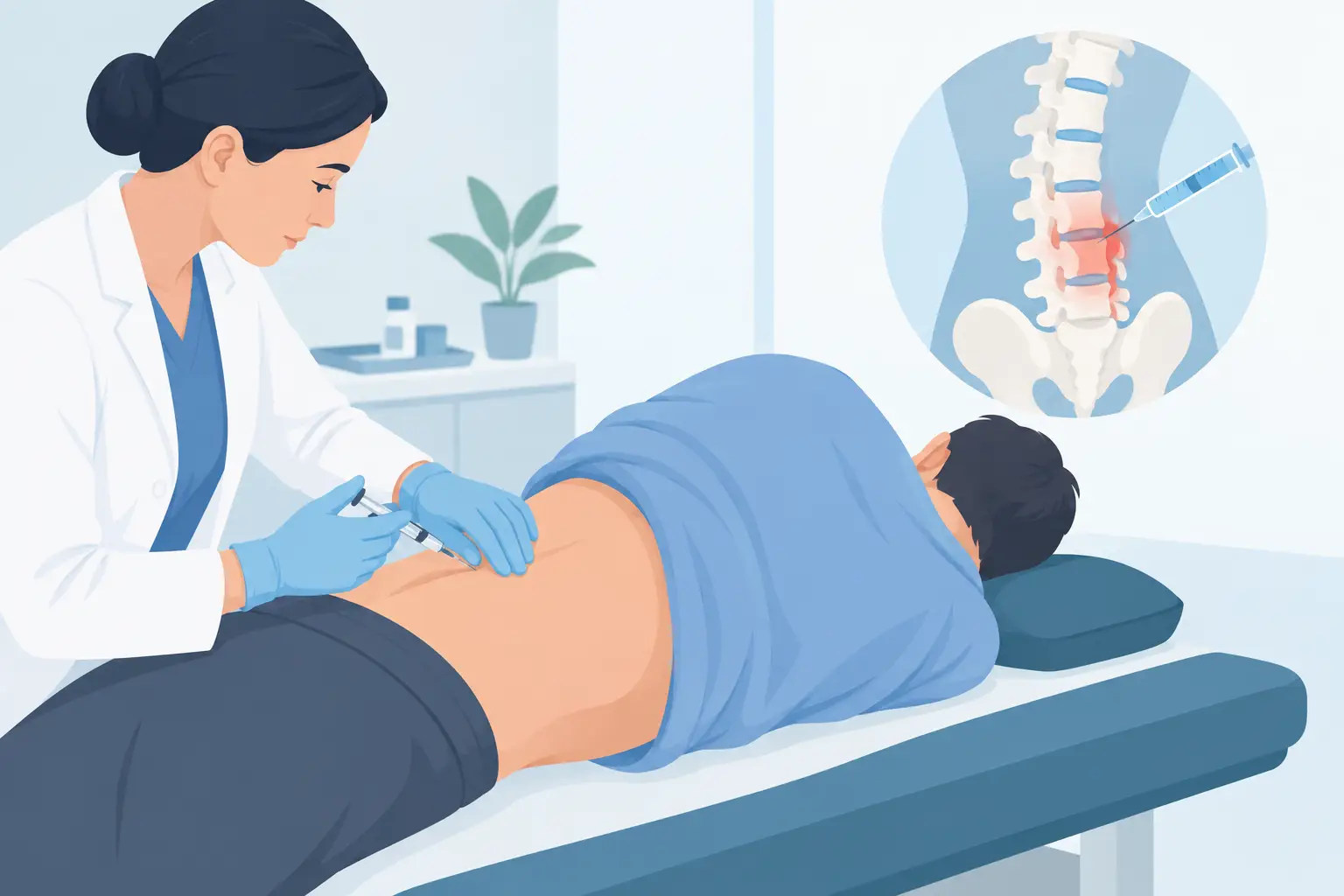
Back pain that persists for months is not always “inflammation to be switched off” with an injection. An injection for chronic low back pain can be useful when the pain comes from a clearly identifiable structure, but it does not replace an accurate diagnosis or a targeted recovery plan. The key question is not only whether to inject, but where, with which medication and with what goal.
Low back pain can arise from the small joints at the back of the spine, the sacroiliac joints, irritation of a nerve root, the intervertebral discs or muscular and ligamentous structures. Similar symptoms may therefore require very different treatments. This is why, in interventional medicine, precision begins before the procedure: with the consultation, the physical examination and a careful reading of any MRI, CT or X-rays.
When an injection for chronic low back pain is indicated
In general, an injection is considered when the pain has lasted more than a few weeks or months, limits work, sleep, walking or rehabilitation, and has not been adequately controlled with appropriate conservative treatment. This may include activity modification, physiotherapy, therapeutic exercise and medication prescribed by the doctor.
There is, however, no single lumbar injection. If the pain increases when you arch your back or twist your trunk and is located mainly in the lower part of the spine, the source may be a joint, for example the facet joints. If the pain is lower down, near the buttock, and worsens with changes of position or weight-bearing, the sacroiliac joint may be involved. If, instead, the pain radiates down a leg, with tingling, burning or electric-shock sensations, possible nerve root involvement needs to be assessed.
The injection can have a therapeutic purpose, reducing inflammation and interrupting a painful phase, but also a diagnostic one. An anaesthetic injected precisely at the suspected site can clarify whether that structure is really contributing to the pain. This information is particularly useful in complex cases, when MRI shows changes that are common with age and are not always the cause of the symptoms.
Why image guidance makes the difference
In the lumbar region, a few millimetres matter. Performing a procedure under ultrasound, CT or fluoroscopic guidance, depending on the site to be treated, makes it possible to see or reach the target precisely, plan the needle path and reduce the risk of depositing the medication in unintended tissues.
Ultrasound is particularly useful for some muscle and tendon injections and for the sacroiliac joint in selected cases, as well as allowing real-time monitoring of superficial tissues and vessels. For deeper targets or those close to the spinal canal, other imaging techniques may be preferable. The choice does not depend on a “better” technology in absolute terms, but on the structure to be treated and the individual person's anatomy.
Image guidance does not make every injection automatically effective. It does, however, make the procedure more consistent with the diagnosis that has been made. It is the step that turns a generic treatment into a targeted one.
How the procedure is performed
After checking the indication, available tests, current medications and possible contraindications, the patient is positioned so as to expose the lumbar or buttock area. The skin is disinfected and, if necessary, local anaesthesia is used. Most injections do not require general anaesthesia, and the treatment is carried out without a surgical incision.
Using image guidance, the specialist introduces a fine needle to the planned site. A local anaesthetic, a corticosteroid or another solution may be injected, depending on the clinical problem and the type of injection planned. The medication and dose are not standard: they must be chosen without automatic routines, especially in the presence of diabetes, bone fragility, uncontrolled high blood pressure or previous side effects from corticosteroids.
The procedure usually takes a few minutes. A short period of observation follows, then suitable patients go home the same day. It is advisable to have someone accompany you if the injection performed can cause temporary numbness or weakness in the limb, or if the doctor considers it necessary.
What to expect after a lumbar injection
In the first few hours there may be relief due to the local anaesthetic. This effect does not necessarily match the final result. If a corticosteroid is used, the anti-inflammatory action may appear over the following days; sometimes, for one or two days, the pain at the treated site may even temporarily increase.
Recovery does not normally require prolonged immobility. It is usually advisable to avoid strenuous exertion on the day of the procedure and to gradually resume activities according to the instructions received. When the pain eases, this window of improvement should be used for an appropriate movement and strengthening programme: trunk control, restoring mobility, load management and a progressive return to daily or sporting activities.
The realistic goal is not always to eliminate pain for good with a single injection. In some patients the benefit is clear and lasting; in others it is partial or temporary; in others still, the lack of response suggests that the diagnostic hypothesis should be reviewed. Repeating injections without a clear clinical reason is not a treatment strategy.
Benefits, limitations and risks to be aware of
The main advantage of a targeted procedure is the ability to treat a specific site with a minimally invasive approach, without a surgical incision and, in most cases, without general anaesthesia. This can support a quick return to activities and, above all, make rehabilitation more tolerable when pain is a real obstacle.
The limitations are just as important. An injection does not automatically correct osteoarthritis, disc degeneration, spinal canal stenosis or postural problems. It is not indicated for every type of back pain, and it does not replace urgent assessment when there is progressive loss of strength, problems controlling the bladder or bowel, numbness in the perineal area, fever, significant trauma or pain associated with unexplained weight loss.
Serious complications are uncommon when the indication and technique are appropriate, but they must be discussed before consent. They may include temporary pain, bruising or bleeding, infection, reaction to the medication, a transient rise in blood sugar in diabetic patients and, depending on the site injected, irritation of nerve structures. Anticoagulant or antiplatelet therapy should not be stopped on your own initiative: it must be reviewed together with the specialist who prescribed it and the doctor who will perform the procedure.
The right choice starts from the cause of the pain
An MRI showing herniated or bulging discs is not, on its own, enough to decide on an injection. Many people without pain have degenerative findings on their scans; conversely, significant pain may come from a structure that is barely visible on imaging. What is needed is the history of the symptoms, the distribution of the pain, the clinical examination and a rigorous correlation with the images.
A specialist assessment makes it possible to determine whether the most suitable approach is a targeted injection, more specific rehabilitation, a different interventional treatment or, in some cases, a surgical opinion. Precision medicine does not mean offering a procedure to everyone: it means avoiding unnecessary treatments and choosing the one most proportionate to the real problem.
If chronic low back pain is narrowing the range of your daily activities, the goal should not only be to find quick relief, but to understand which structure is demanding attention and to build a pathway that makes that relief useful over time.
Want to know if it applies to you?
At the first consultation we review your clinical history and previous imaging together.
More articles
The information on this page is for general education and does not replace a medical consultation. The indication for any treatment must always be assessed individually.